
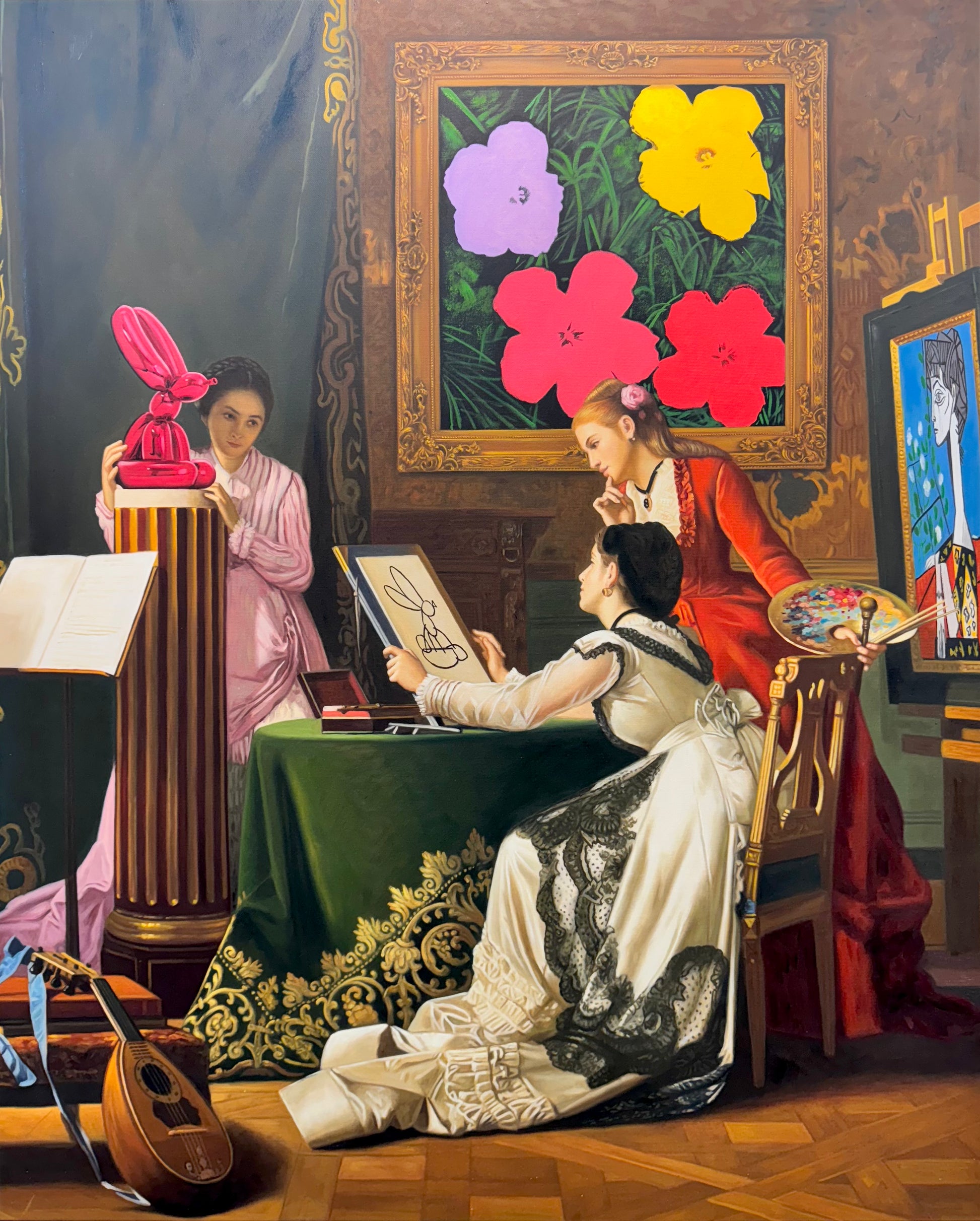
The Art Studio
The Art Studio
Leo Manelli
Certificate of Authenticity: certificate issued by the artist
Signature: on the back of the canvas
Edition: unique
Year: 2022
SUPPORT: canvas
TECHNIQUE: oil on canvas
DIMENSIONS: x
Couldn't load pickup availability
 Trustpilot: Excellent

 Fast delivery guaranteed within 48 hours
- Free Shipping Worldwide
- Free returns within 14 days

Description by the gallery owner
Description by the gallery owner
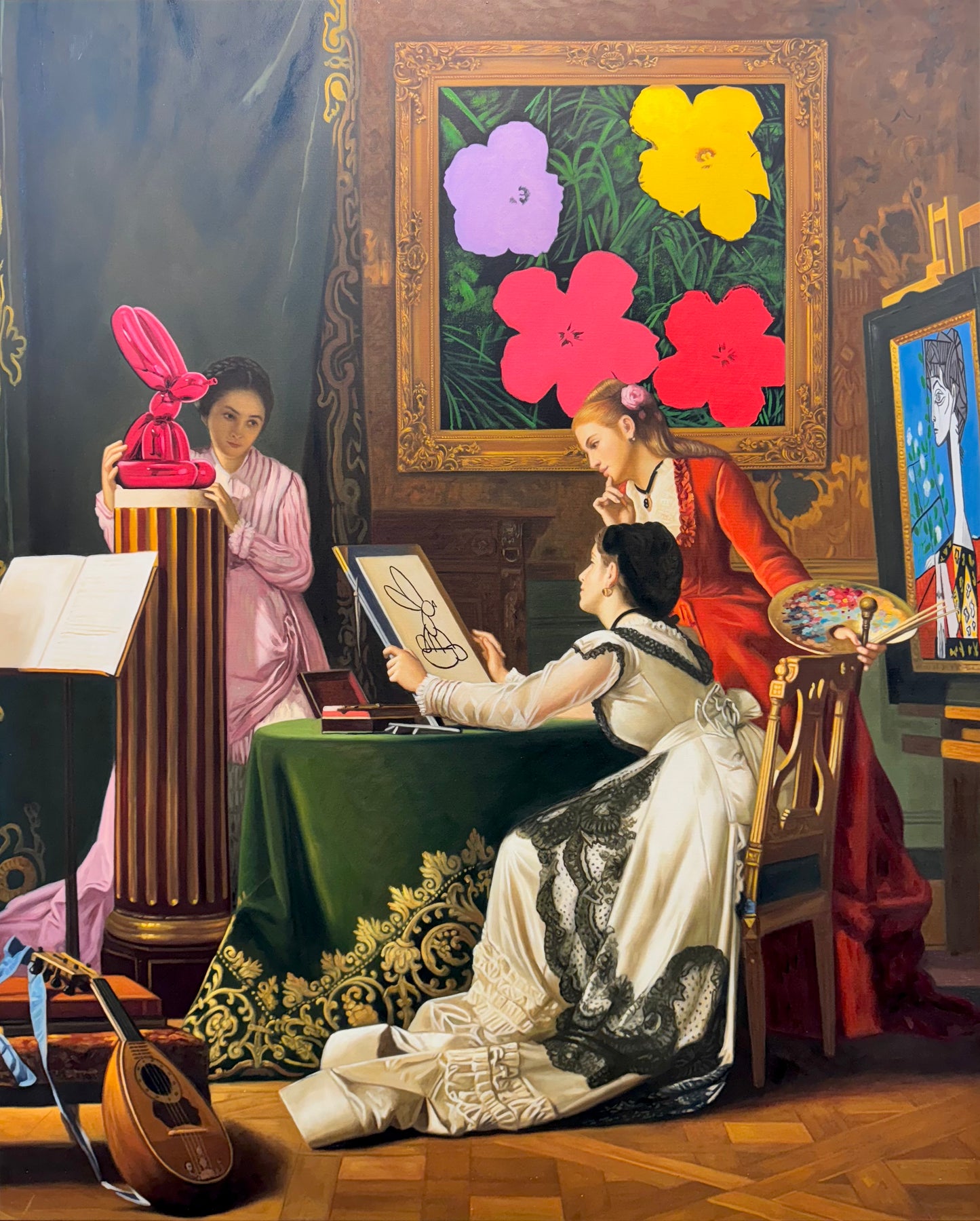

Leo Manelli
Leo Manelli is an artist whose work blends the classical and the modern. Specializing in creating oil replicas of 19th-century works with a contemporary twist, Manelli developed a strong interest in art from a young age, spending hours studying the works of the great masters and honing his technique. As his career progressed, Manelli began adding a personal touch to his replicas, incorporating references and elements from modern art into his paintings. The result is a harmonious fusion of past and present, characterized by incredible attention to detail, vivid colors, and a unique aesthetic. Today, Manelli's works are exhibited in galleries around the world. He has gained a following of collectors and art enthusiasts who appreciate his reinterpretation of classical elements through a contemporary perspective. His art is a testament to his passion for painting and his commitment to exploring new forms of expression to create beautiful and meaningful works.
Other works by the artist
Seguici su:


