


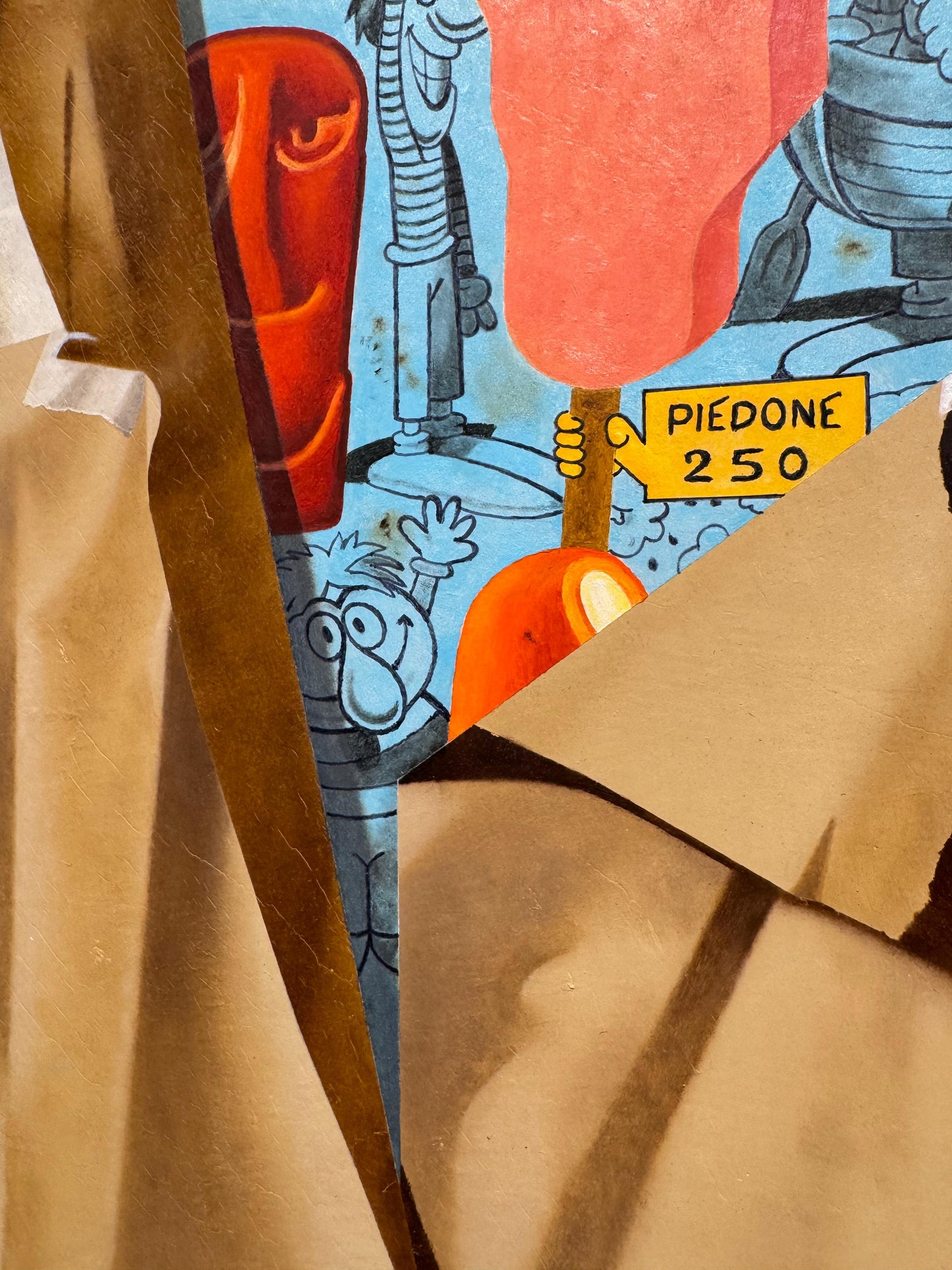
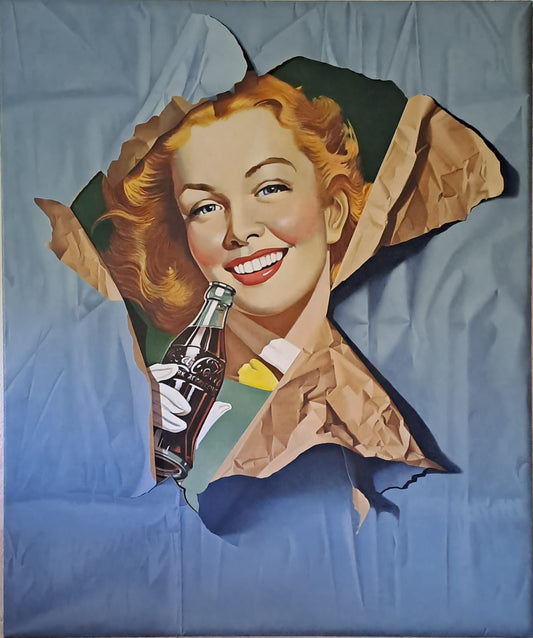
SUMMER OF THE 80'S..
SUMMER OF THE 80'S..
Fabio Inverni
Certificate of Authenticity: original by the artist
Signature: signed in original
Edition: unique
Year: 2025
SUPPORT: jute canvas
TECHNIQUE: oil
DIMENSIONS: x
Couldn't load pickup availability
 Trustpilot: Excellent

 Fast delivery guaranteed within 48 hours
- Free Shipping Worldwide
- Free returns within 14 days

Description by the gallery owner
Description by the gallery owner


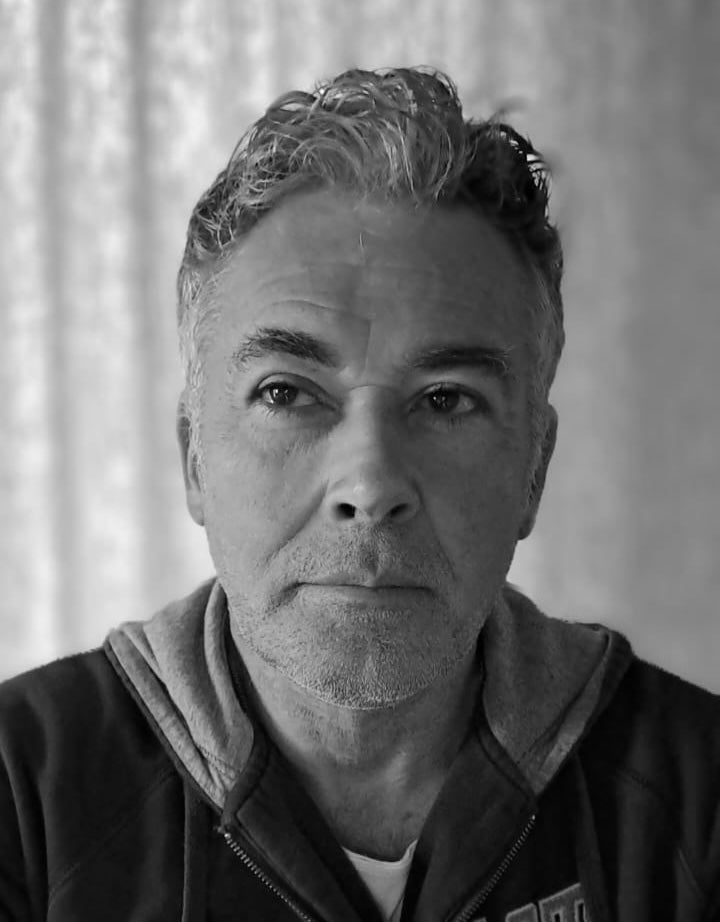
Fabio Inverni
Fabio Inverni was born in Florence on March 19, 1968. He lives and works in Poggio a Caiano. He is the son of Francesco Inverni, a painter and teacher of Ornamental and Figurative Art at the Art School of Florence until 1991. Thanks to his father, Fabio Inverni developed an innate passion for painting, and was self-taught. During his childhood, he frequented galleries and art circles, and accompanied his father to several important exhibitions, including the 1978 Venice Biennale. Although he lived art, in a "close family" sense, he later turned to painting. He attended the "T. Buzzi" Industrial Technical Institute in Prato and graduated in 1988. In 1989, he moved to Rome and worked at "Faro Disegni" as a textile designer. He remained there until 1991, a year that would define his life. His father died young. Faced with this bitter reality, Inverni decided to turn to painting. Influenced by his father's paintings, his early works arose from a personal interpretation of "genre scenes" inserted into a completely dreamlike and unfinished context. In 1992, he frequented the artists of the historic "Saletta Ambra" in Poggio a Caiano, and held his first solo exhibition there that same year, curated by Stefania Laurenti. His still lifes and landscapes emerge from the canvas with the "material" they are made of, and the light is crepuscular and diaphanous. Everything is melancholic, and the contours of objects crumble like a memory. Inverni's entire early period is projected toward melancholy and memory. 1995 marks the beginning of Fabio Inverni's American career. Thanks to the Italian-American painter Benini, he traveled to the United States for two months, where he worked on several works commissioned by art collectors in Hot Springs, Arkansas. During this period, he also held several solo exhibitions, including one at the Herr Chambliss Fine Art Gallery in Shreveport, Louisiana, and another at the Casa d'Arte Gallery in 1997. In 1998, he participated in the "Europ'Art" fair in Geneva and organized a solo exhibition at the "Arte Renaca" gallery in Viña del Mar, Chile. In 2003, in addition to various solo exhibitions in Italy, he was invited to exhibit alongside six Italian artists at the Grace Museum in Abilene, Texas. That same year, he organized a solo exhibition at the "Leonard Fine Art Gallery" in Hot Springs, Arkansas, where he received the honor of Ambassador of Arkansas. Also in 2003, he exhibited in Belgium, at the "D'Haudrecy Art Gallery" in Knokke. In 1999, he returned to the United States, exhibiting again in Hot Springs at the Talbot Engman Gallery and in Shreveport at the Casa d'Arte Gallery. That same year, he also exhibited in Madrid at the Nuevo Grial gallery. In 2001, he held solo exhibitions at the La Cima Club Gallery in Irvine, Texas, and at Fabio's Gallery in Raleigh, North Carolina. He also participated in an important group exhibition celebrating the twinning of Poggio a Caiano and Charlottesville, which began at the Scuderie Medicee in Poggio a Caiano and concluded in 2002 at the McGuffey Art Center in Charlottesville, Virginia. His American experience continued in San Francisco at the Exotic Fine Art Gallery and the Benini Foundation in Johnson City, Texas. 2004 was a turning point for Inverni, as his artistic experimentation, beyond landscape and still life, shifted toward hyperrealism, while still respecting his defining canons. Melancholy began to take root in Inverni's artistic development, and his works became more eloquent. They now speak, no longer to evoke a memory, but to the emotions of the individual viewer, who finds an intimate meaning within the silence of these paintings. The "non-word" conveyed to us by the "precariousness" of these painted sheets embodies the precariousness of humanity, of a society that sometimes withdraws into a childish world to rediscover a bit of lost naiveté in disorder. This exorcism of common, used or simply abandoned paper, corroded and hardened by time, perhaps a symbol of humanity abandoned to itself. In 2005 he participated in a solo exhibition at the castle of Santa Margherita Ligure and in 2006 he was invited to the "Third National Biennial of Contemporary Sacred Art" in Pistoia curated by the critic Giampaolo Trotta and participated for the first time in the Verona Fair "Art Verona". In 2007 he exhibited in Boca Raton (Florida) with the MOdenarte gallery. From 2007 to 2010 he was present at many national and international fairs: Macef (Milan), Fiera Arte Padova (Padua), Art Verona (Verona), NY expo (New York), Düsseldorf Fair (Germany) and in important national group exhibitions including: the Museum of Contemporary Art of Monreale (Palermo), the Rocca di Cento (Cento-Ferrara), the Museum of Contemporary Art LUCCA (Lucca), the Cassero Medievale in Prato; in 2010 he began a project, concluded in 2011, with the Famiglia Margini gallery called Terzo Rinascimento which led him to exhibit with other artists in important public buildings including: the Palazzo Ducale in Urbino and the Galleria Civica d'Arte Contemporanea in Aci Castello (Catania) and which concluded in Milan at the gallery's headquarters. In 2010 Inverni was selected together with other artists for the creation of a public "traveling" group show called 50 painters 50 singers which was present: at the Palagio di parte Guelfa in Florence and at Palazzo Cardi in Cortona (Arezzo) which ended in 2011, also in 2011 he was selected among the Italian artists at the 54th Venice Biennale which ended in Turin at the "Palazzo delle Esposizioni". In 2013, for the twentieth anniversary of his career, he was invited to exhibit his works at Hot Spring, the cradle of his first American experience and again in 2013 in San Francisco he participated in group shows in various galleries. In 2015 he was part of the group show "Vitamine" (Carlo Palli Archive) inaugurated in Florence at the Museo Del Novecento (catalogue Polistampa editions). His works are in important public and private collections.
Other works by the artist


Box Bouguereau

SUMMER OF THE 80'S..


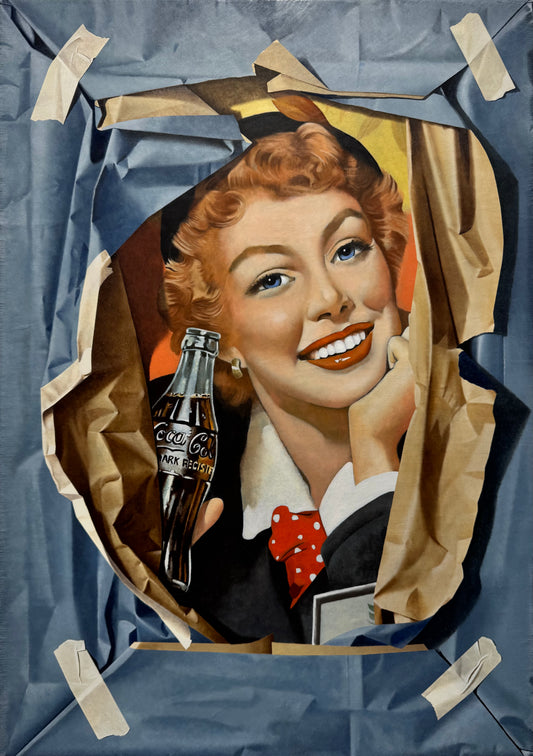
Coke is better
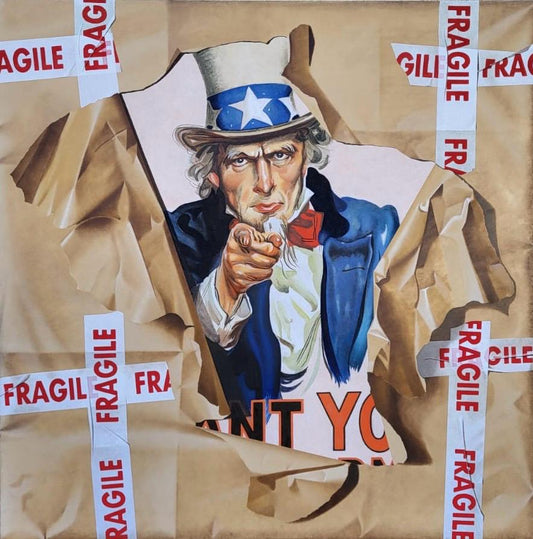
I Want You
Do You Want Coke?
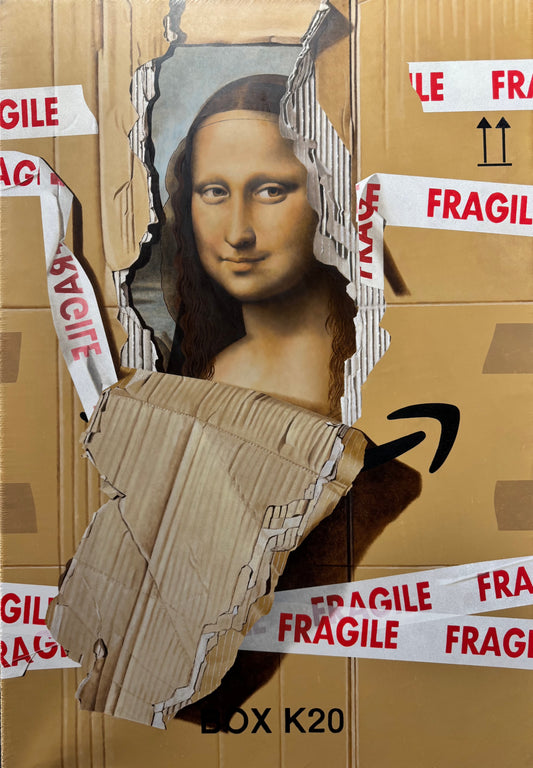

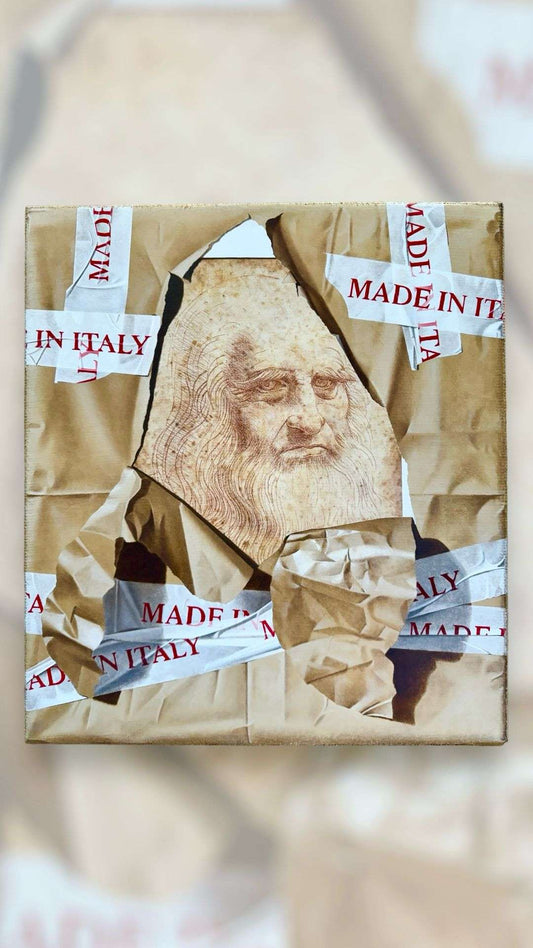
Leonardo da Vinci
Seguici su:


