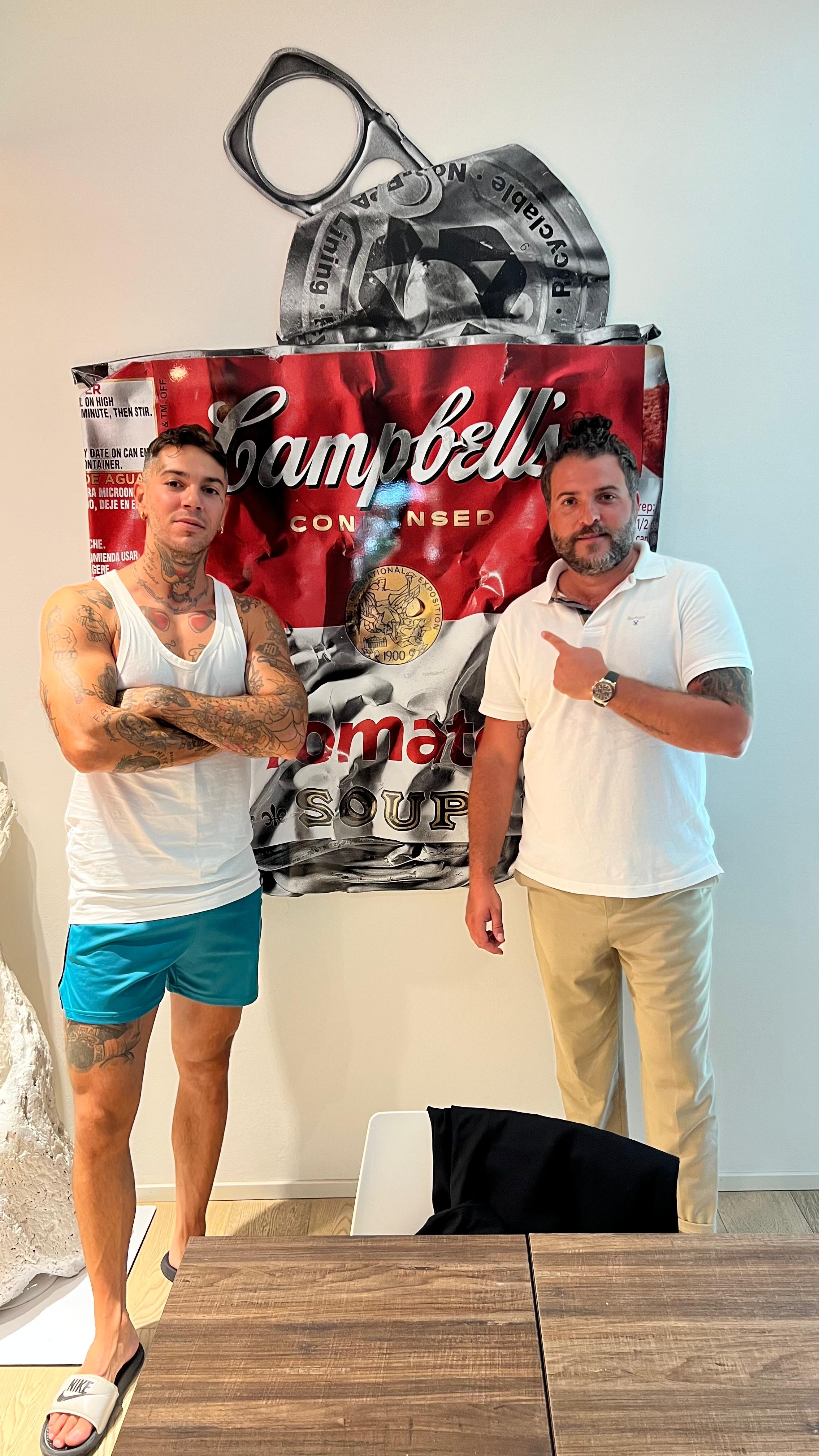
GUMM is a contemporary Italian artist, an exponent of the Neo-Pop movement.
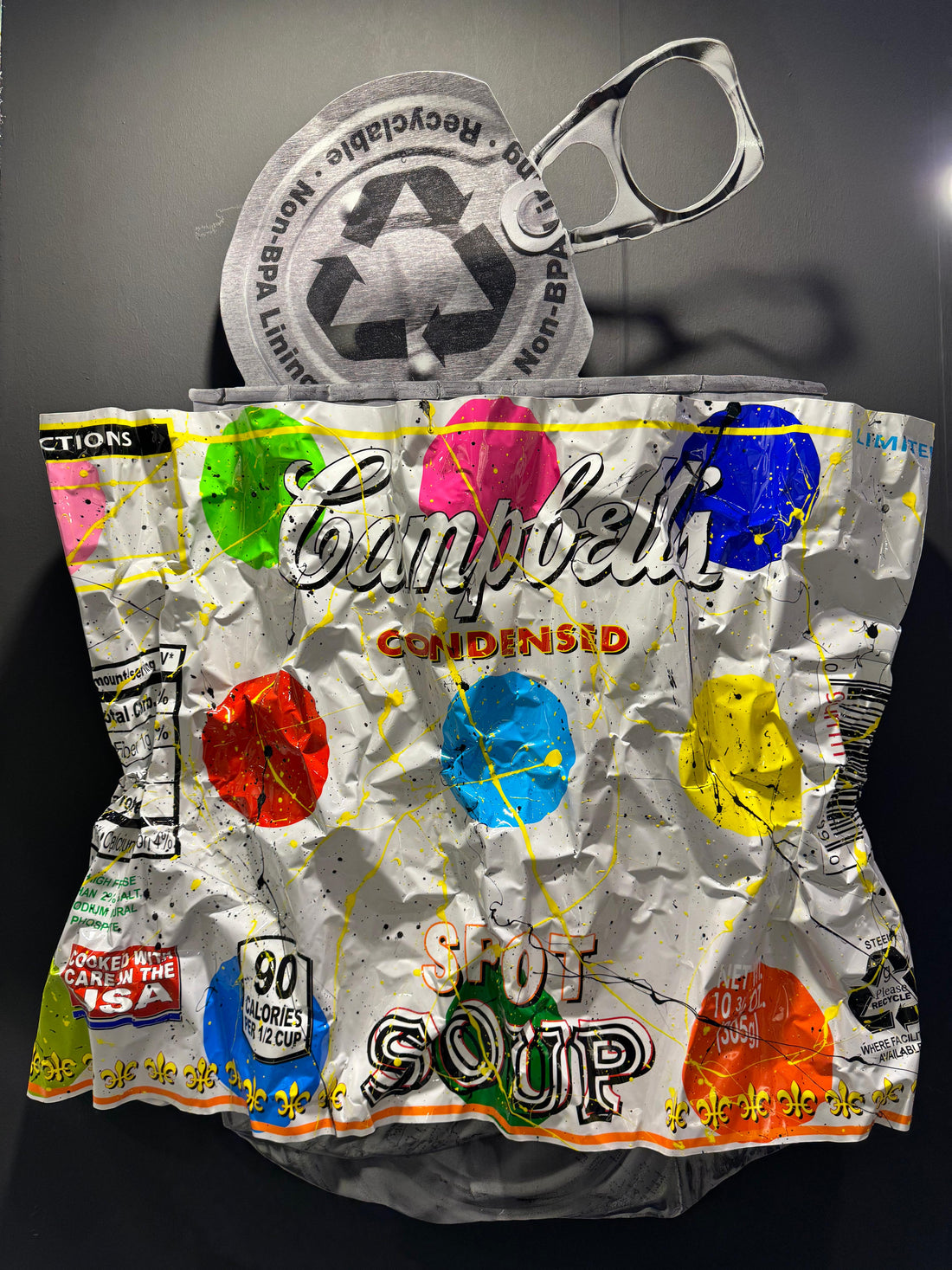
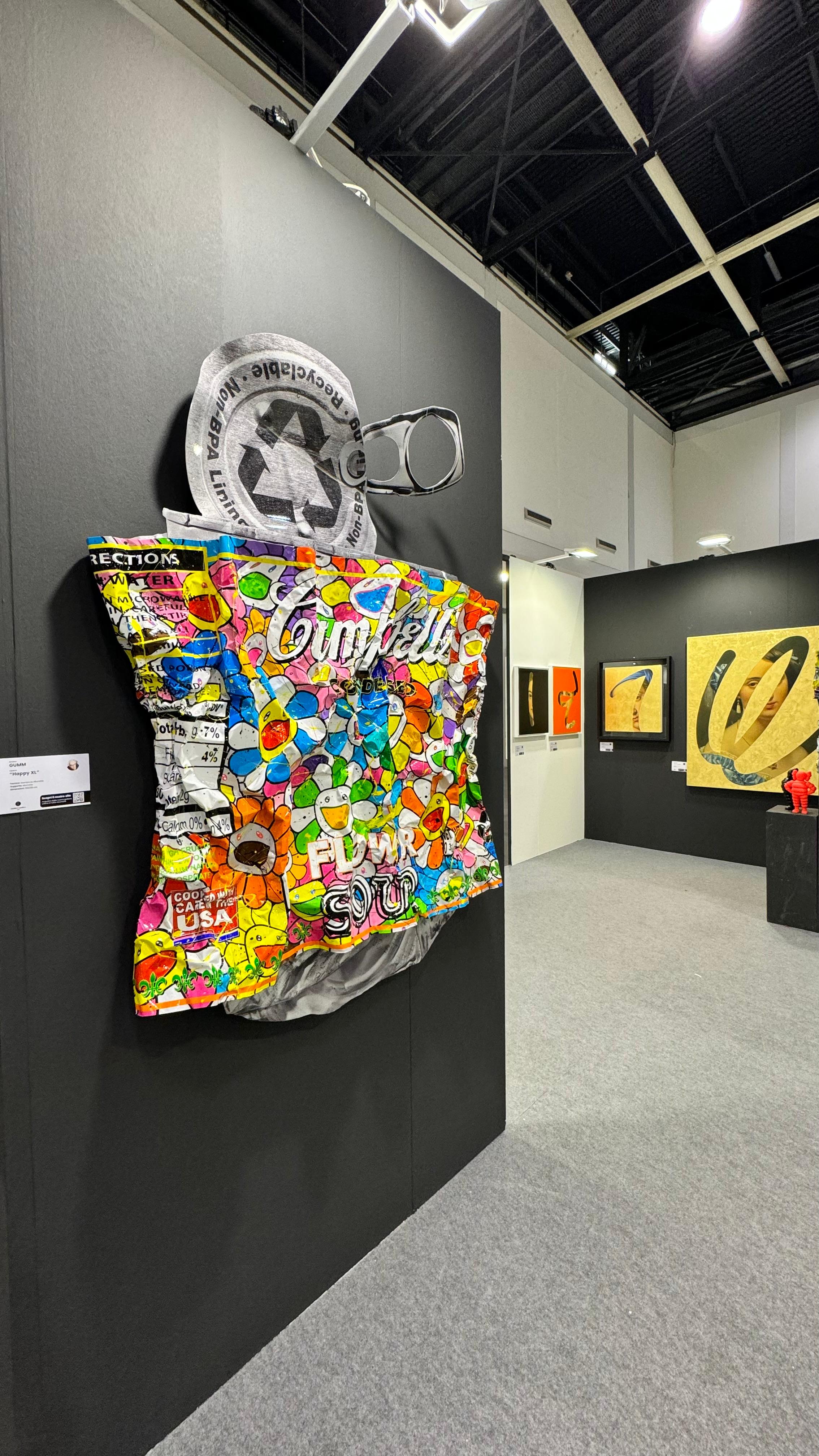
American Pop Art was a key inspiration for the Venetian artist. GUMM, in fact, reinterprets the meaning of Andy Warhol's soup cans in an original way. Unlike the American artist, GUMM doesn't serially reproduce his cans: each of his works is unique. Moreover, if Warhol moved his cans from the supermarket to the art gallery, GUMM metaphorically moves them from the side of the road or even from the trash can to exhibit.
We can consider "Superflat Pop-Cans" as an artistic trend capable of transforming an object symbolic of mass consumerism into an iconic work of art through a curious play of irony, satire and optical illusion.
Growing up in Venice, where the artist was born and still works, played a crucial role in the development of his artistic journey. The Venetian context, with its rich cultural history and ability to attract artists from around the world, was essential in inspiring the artist's approach. The Venice Biennale of Art, Film, and Music serve as a crossroads of ideas, styles, and contemporary artistic movements. The rich cultural environment experienced by GUMM led the artist to develop some fundamental concepts for theorizing his artistic movement.
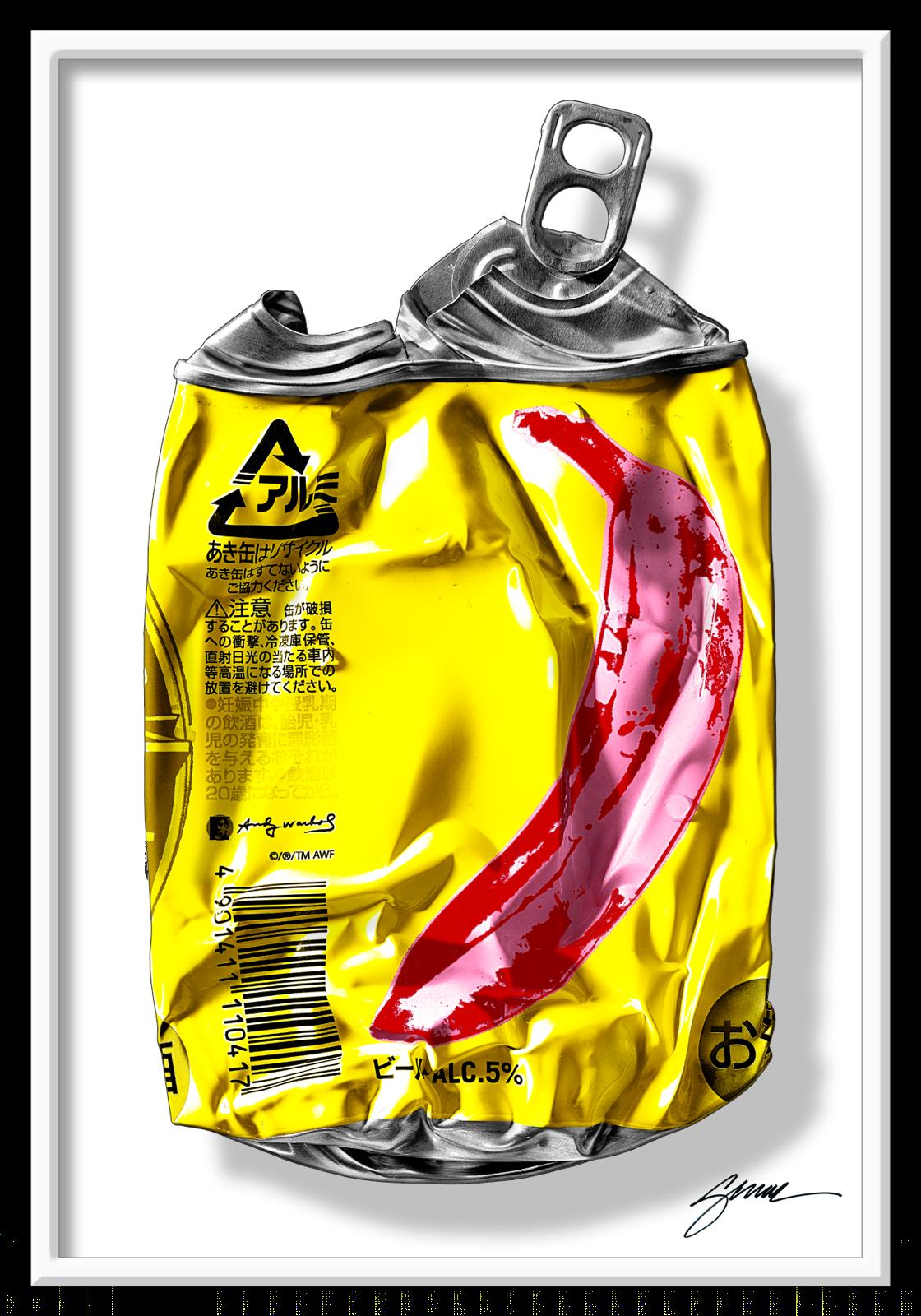
His true creative breakthrough came in 2015. On a rainy day, while walking the streets, his eyes fell on a crushed and discolored soda can, abandoned on the wet asphalt. That object, so banal yet so wonderful, somehow enlightened him. The crushed can, transformed into waste, suddenly became for him a powerful symbol of the human condition and the superficiality of our contemporary world. "Superflat Pop-Cans" is not only a visual commentary, but also a provocation that stimulates critical dialogue on the contemporary world and our era of sharing and virality.
The jar represents the human condition and the superficiality of our contemporary world, while the label, featuring iconic images and recognizable symbols, represents the obsession with appearances and luxury.
GUMM denounces consumerism and the transience of values: his works invite us to consider how often we empty and crush not only physical objects, but also meanings and relationships, transforming ourselves into "landfill objects."
GUMM's goal? To provoke and ridicule contemporary globality.
Through optical illusion, perspective, and visual distortion, the artist further leads the viewer to question the boundary between reality and non-reality.
Photographs and sculptures are the mediums used by GUMM to convey his ironic commentary on our contemporary world.
The photographs act as visual mirrors for the sculptures, creating connections between the physical and the imagined. They offer a unique perspective, capturing the moment when the ordinary is elevated to an immortal icon. The artist plays with both, with their dimensions and shapes, so that viewers are continually challenged to see the works from different angles, engaging them as active participants in the creative process. This optical illusion thus becomes an invitation to seek a more authentic connection with reality, urging viewers to look beyond the surface and explore the complexities of contemporary life.
GUMM's creations feature deformations digitally drawn with a graphics tablet, which seem to reproduce the sensation of observing images through the surface of the water, a clear reference to the high waters of Venice.
Currently, GUMM exhibits in prestigious art galleries around the world.